The IT/OT divide
IT and operations live on different planets. Connect what runs separately and make integrated performance visible.
What you see
What is really happening
The IT/OT divide is an operating model question treated as a tooling question. IT and operations run separate organizations and budgets, with no shared data foundation and no joint roadmap. Each side optimizes its own part, and the friction between them stays invisible until someone measures it.
How we work on it
IT/OT convergence architecture and roadmap: data foundation, IIoT connectivity from edge to cloud and software-defined automation, brownfield reality included, so new use cases build on one base instead of starting from zero.
The right specialists, from systems integration to data platforms, under one accountable lead and one contract.
Joint governance, shared KPIs and a connected operating model in which IT and operations answer for the same number.
What you get
A target architecture and roadmap for IT/OT convergence, the first use cases running on the shared data foundation, and one operating model with shared KPIs for IT and operations.
Typical KPIs: unplanned downtime, energy per unit, opex per unit, maintenance cost, time to put a new use case into operation, among others.
Form of engagement: Usually Build and Mobilize (MAKE and ADOPT), followed by an Advisory Retainer (TRANSFORM).
Read more
Most industrial AI pilots work. What fails is the handover into operations, and that has a name and a calendar.
Questions
IT/OT convergence connects information technology (IT), the systems that run the business, with operational technology (OT), the systems that run machines and lines. Its technical layer is the industrial internet of things (IIoT), which connects machines, controls and systems. The aim is one data foundation and one operating model, so that business decisions rest on what actually happens on the shop floor.
Because they are treated as a tooling question. Without shared ownership, budget and KPIs for IT and operations, every new platform adds another interface instead of removing friction.
Software-defined automation moves control logic from proprietary hardware into software that runs on standard industrial hardware and edge platforms. Automation can then be versioned, updated and scaled like software in IT, which makes it the next step of IT/OT convergence.
No. Most plants are brownfield, and the architecture has to work with the machines, controls and systems that are already running.
All six starting points
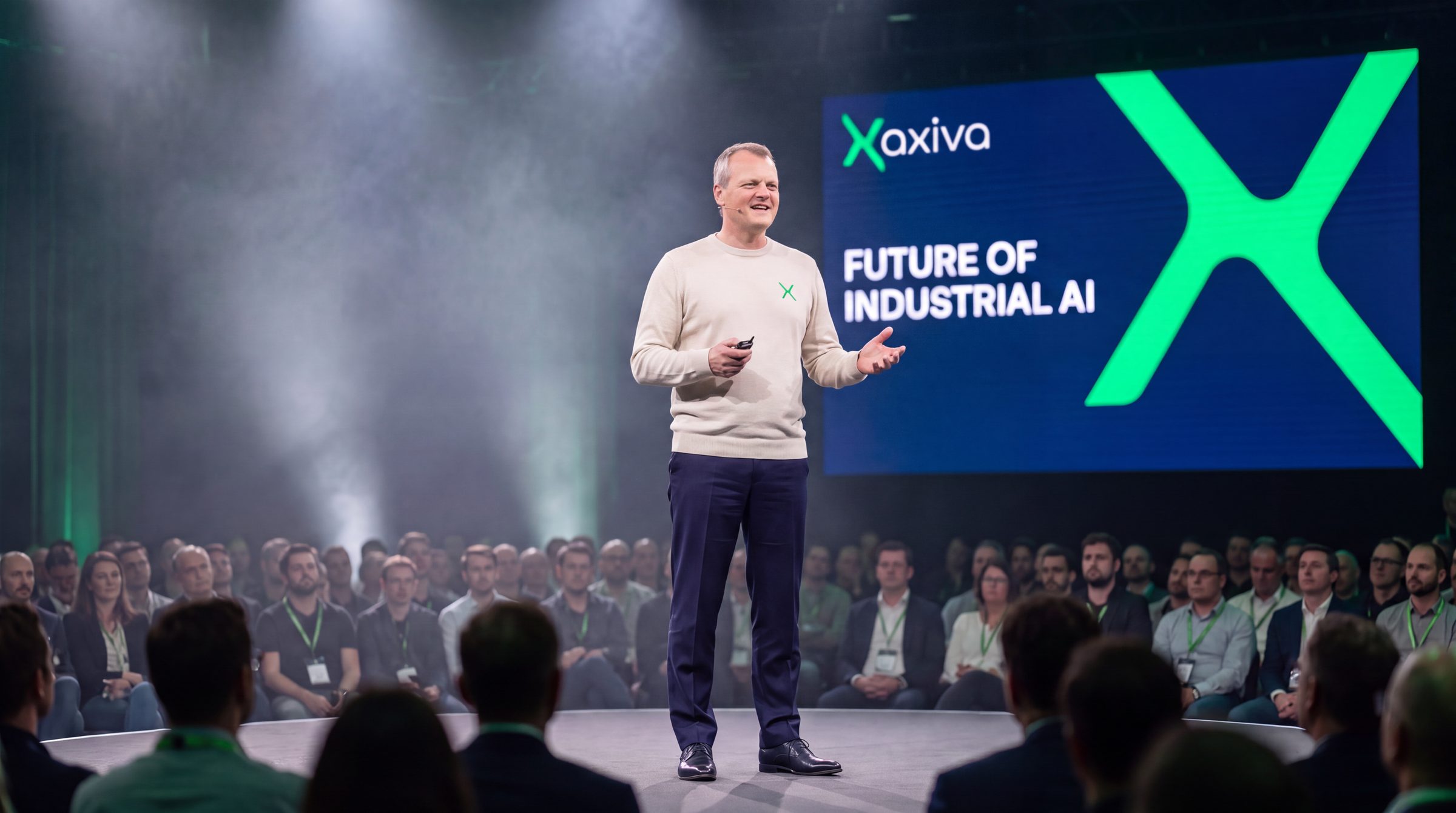 Likeness: A. Geiss; AI image
One conversation.
Your thesis. Our proof plan.
Booking runs on Microsoft Bookings and opens in a new window. Nothing reaches the booking page before you go there.
Reach measurement
We would like to use Vercel Web Analytics to count which pages are read: no cookies, no profiles, aggregate figures only. The provider is our host Vercel Inc., USA. We measure only with your consent, which you can withdraw at any time through “Privacy settings” at the foot of every page. Details in the privacy notice, Section 11.
Your browser sends a signal against measurement (Global Privacy Control or Do Not Track). We therefore do not measure.